
Going Solar With Your Utility: Net Metering & Interconnection
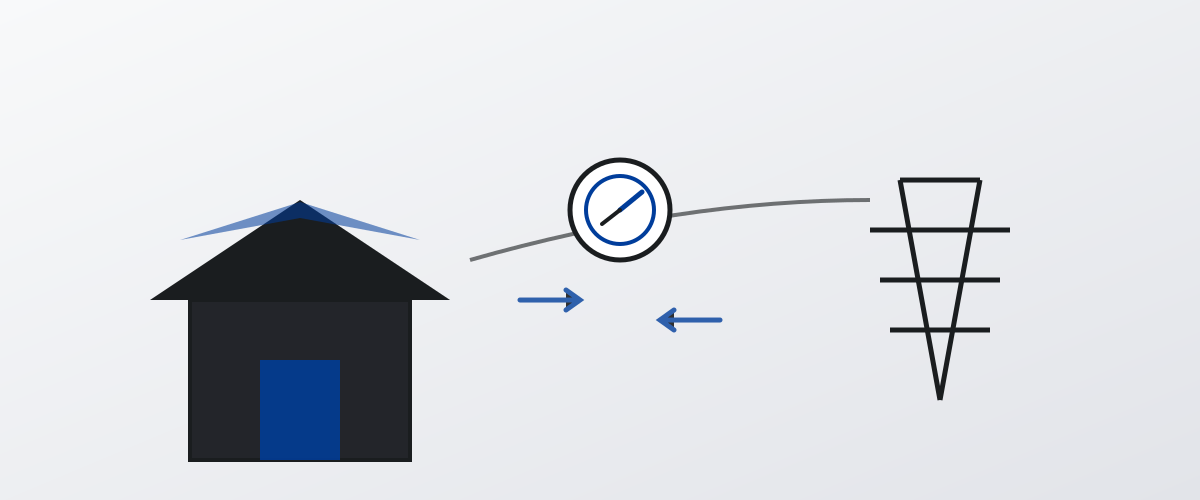
You're Not Leaving the Grid
A common misconception: install solar and you've cut ties with the utility. Almost no one does that. The vast majority of home solar systems stay connected to the grid, and that connection is what makes residential solar work financially. Your panels produce more than you need at midday and less than you need at night, so you lean on the grid to balance the difference both ways.
How your utility credits you for the surplus, and how hard it is to get connected in the first place, will shape your savings as much as the panels you buy. So learn this before you sign.
Net Metering, Plainly
Net metering is the billing arrangement that lets your meter run backward. When your panels overproduce, the excess flows to the grid and you earn a credit. When you draw from the grid at night, you spend those credits. At the end of the billing period, you pay for your net usage — what you took minus what you sent.
The crucial detail is the credit rate. Three common structures, from best to worst for you:
- Full retail net metering — every exported kilowatt-hour credits you at the same rate you'd pay to buy one. This is the gold standard and makes solar most valuable. Still common in many states, but shrinking.
- Net billing — exports credit at a lower "avoided cost" rate, often half of retail or less. California's NEM 3.0 is the marquee example. Solar still pays, but the math favors using your own power instead of exporting it, which is why batteries are surging there.
- Buyback / feed-in — common in deregulated markets like Texas. Your retail provider sets the export rate, and it ranges from generous to nearly worthless. You shop for the provider with the best solar buyback.
Before anything else, find out your utility's exact net metering or export policy. It's the single biggest variable in your solar savings — bigger than panel brand, bigger than installer. A great system under a stingy export policy can underperform a modest system under full retail net metering.
Interconnection: The Permission Slip
You can't just plug solar into the grid. The utility has to approve and connect it, a process called interconnection. Your installer files an interconnection application that includes the system design, equipment specs, and a one-line electrical diagram. The utility reviews it to confirm your system meets safety and technical standards and won't destabilize the local grid.
Once approved and installed, the utility inspects the work and swaps in a bidirectional meter that can measure energy flowing both ways. Only after they grant Permission to Operate (PTO) can you legally switch the system on. Turning panels on before PTO can mean fines and a forced disconnection — so the wait, frustrating as it is, is mandatory.
The Timeline Nobody Warns You About
The panels go up in a day or two. Then you wait. The full process — contract, design, permitting, installation, inspection, and PTO — typically runs two to four months, sometimes longer in slow jurisdictions or with backlogged utilities. The actual installation is the fastest part; the paperwork on either side is the bottleneck.
Here's the order of operations on a normal project:
- Sign contract and finalize system design
- Installer pulls local building permits (1–4 weeks)
- Utility interconnection application submitted and approved (2–6 weeks)
- Physical installation (1–2 days)
- Local jurisdiction inspection (1–3 weeks)
- Utility installs the bidirectional meter and grants PTO (1–4 weeks)
- System goes live
A good installer manages all of this for you. If a company hands you the permit and interconnection paperwork to handle yourself, treat that as a warning sign. Filing it wrong, or filing the wrong version of a one-line diagram, can reset the clock and add weeks. Experienced installers know each utility's quirks and submit it right the first time, which is a real part of what you're paying them for.
Fixed Fees and the Charges That Survive Solar
Even at 100% offset, your utility bill rarely hits zero. Most utilities charge a fixed monthly connection or "customer" fee — usually $10 to $30 — just to keep you attached to the grid. Some have added solar-specific fees or demand charges. None of this kills the value of solar, but it means "I'll have no electric bill" is usually optimistic. Ask your utility what fixed charges remain for solar customers.
Watch for Net Metering Changes
Utilities lobby steadily to reduce net metering, and policies shift. The reassuring part: most states "grandfather" existing solar customers, locking in the rules that applied when your system was approved, often for 10 to 20 years. That's a real argument for going solar sooner rather than later in states where a policy cut is on the table — lock in today's terms before they change.
How Three Real Markets Treat Solar Exports
Policy varies enough that the same panels behave very differently depending on where you live:
- A full-retail net metering state (still common in much of the Northeast and parts of the Midwest): a kilowatt-hour you export is worth the same as one you buy. You can size the system to your annual usage and let summer surplus bank against winter draw. Solar value is at its highest.
- California under NEM 3.0: exports credit at a much lower avoided-cost rate, often a quarter to a third of retail. Using your own power beats exporting it, so most new California systems pair solar with a battery to store midday production for the evening. The system still pays off; the design just changes.
- Texas (deregulated): there's no statewide mandate. Your retail provider sets the buyback rate, and it ranges from near-retail "solar buyback plans" to almost nothing. You shop providers for the best solar rate the way you'd shop any plan.
The lesson isn't that one state is "good" and another "bad" for solar. It's that you have to know your specific rules before you can judge a quote's savings claims. An installer's projected savings rests entirely on the export rate they assumed — ask them to show it.
Surprises Worth Knowing in Advance
Annual true-up. Many net metering programs settle once a year, not monthly. You may carry credits through summer and draw them down in winter, with a single reconciliation at year's end. Don't panic at a month where you "owe" — look at the annual picture.
Oversizing limits. Utilities often cap system size at 100–120% of your historical usage for net metering eligibility. If you plan to add an EV or electrify heating, declare that future load so you're allowed to build the larger system you'll need.
Exported credits rarely become cash. Most programs let surplus credits offset future bills but won't cut you a check for a net-positive year. Building a system far larger than your usage usually just donates power to the utility.
What to Confirm Before You Sign
- What is my utility's current net metering or export rate?
- Will I be grandfathered into today's policy, and for how long?
- What fixed monthly charges stay on my bill as a solar customer?
- Does my program true up monthly or annually?
- Will the installer handle all permitting and interconnection paperwork?
- What's the realistic timeline from contract to Permission to Operate?
Ready to Compare Solar Quotes?
Get free, no-obligation quotes from top-rated installers in your area — and see exactly how a custom system would be sized for your home.
Get Free Solar Quotes